There’s no such thing as an “ideal” body shape, regardless of what some may try to tell you.
Every body is beautiful
Bodies come in all different shapes and sizes. That’s part of what makes each of us unique.
It’s important to know that there isn’t an “average” or “typical” body.
Some of us are curvier, some of us have narrower hips or broader shoulders — we’re all a little bit different.
Still, most of us can categorize our shape into a few broad categories.
Some of the most common general categories include:
- rectangle
- triangle or “pear”
- inverted triangle or “apple”
- hourglass
These are just a few of the different body types that you might hear about. Oftentimes, there’s a lot of variation within one “type.”
You may find that your individual shape features characteristics from several of the different body types discussed below:
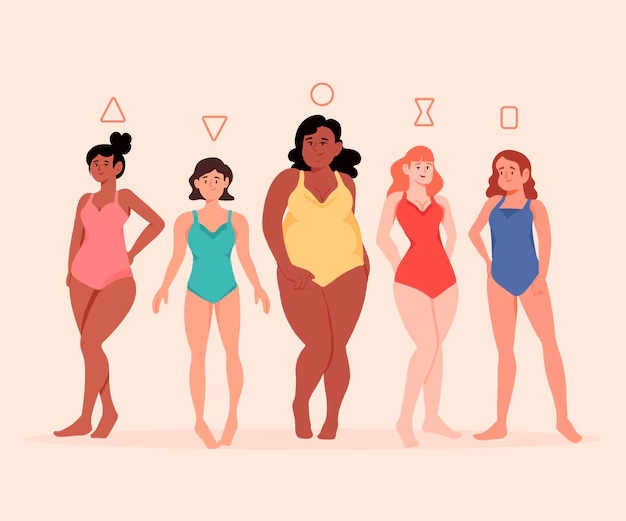
Rectangle, straight, or “banana”
If your waist measurements are about the same as your hip or bust, and your shoulders and hips are about the same width, you have what’s called a “banana” or rectangle body type.
Triangle or “pear”
With this shape, your shoulders and bust are narrower than your hips.
You probably have slim arms and a fairly defined waist. Your waist most likely slopes out to your hips.
Spoon
The spoon body type is pretty similar to the triangle or “pear” shape.
Your hips are larger than your bust or the rest of your body and may have a “shelf”-like appearance.
You likely have a defined waist. You may also carry some weight in your upper arms and upper thighs.
Hourglass
If your hips and bust are nearly equal in size and you have a well-defined waist that’s narrower than both, you have an hourglass shape.
Your legs and upper body are probably considered proportionate.
Your shoulders may be slightly rounded, and you most likely have a rounded buttocks.
Inverted triangle or “apple”
If your shoulders and bust are larger than your relatively narrow hips, you have what’s known as an inverted triangle or “apple” shape.
Round or oval
If your bust is larger than the rest of your body, your hips are narrow, and your midsection is fuller, you have what’s usually called a round or oval body type.
Diamond
If you have broader hips than shoulders, a narrow bust, and a fuller waistline, you have what’s called a diamond body shape.
With this type, you may carry a little more weight in your upper legs. You may also have slender arms.
What factors affect your body shape?
Some elements of your body type are determined by your bone structure.
For example, some people have a curvier, rounder buttocks and curvature in their spine.
Others may have wider hips, shorter legs, or longer torsos.
How tall or short you are will also affect the overall shape of your body.
By the time you reach adulthood, your bone structure and proportions are largely established — even if your measurements change as you gain or lose weight.
Genetics also play a role. Your genes determine how your body accumulates and stores fat.
And in many cases, body fat isn’t evenly distributed.
Some may find that they typically store fat in their mid-section, while others may put weight on in their thighs, legs, or arms first.
Hormones can also affect your body shape.
For example, stress can trigger your body to release the hormone cortisol. ResearchTrusted Source suggests that stress-induced cortisol may be tied to fat buildup around your most vital organs in your mid-section.
Estrogen and progesterone, released by sexual organs, can also affect how your body stores fat. Estrogen, for example, can lead your body to store fat in your lower abdomen.
The bottom line
Whatever body shape you have, just remember: You are beautiful.
There’s no such thing as an “ideal” body shape, regardless of what some may try to tell you.
The most important thing is that you’re happy and healthy.
To learn more, click here.